10 Ways To Improve Acoustics With Specialized Drywall
Noise from conversations, televisions, and equipment travels through interior walls and ceilings, disrupting activities in neighboring rooms. Whether you’re planning a home renovation or a commercial construction project, the materials influence how effectively a building mitigates sound. Specialized drywall products and installation techniques resolve common acoustic problems.
1. Install Sound-Dampening Drywall Panels
Standard gypsum boards provide some resistance to noise, but specialized acoustic drywall uses additional materials to limit sound transmission. The panels feature dense gypsum cores and an internal viscoelastic polymer layer. When sound waves strike the wall, the polymer dissipates some of the vibrational energy and decreases the amount of noise reaching the adjacent room.
These products work well in bedrooms, conference rooms, and shared walls between residential units. Since sound-dampening drywall resembles conventional gypsum board, installers can incorporate it into many existing wall designs without dramatically increasing the partition’s thickness. Ultimately, the final acoustic performance depends on the entire wall assembly.
2. Increase Drywall Thickness
Thick gypsum panels provide additional mass that helps resist airborne sound transmission. For example, a 5/8-inch drywall panel typically provides greater resistance to sound vibrations than a conventional 1/2-inch panel with a similar composition. The additional material reduces the amount of sound energy passing through the wall, although the improvement depends on the surrounding construction.
Commercial buildings frequently incorporate 5/8-inch drywall because its properties offer advantages beyond acoustic performance. Certain panels provide fire resistance and durability that suit demanding environments. However, thickness alone won’t eliminate unwanted noise, so property owners must consider the insulation and framing behind the panels.

3. Incorporate Multiple Drywall Layers
Installing two layers of gypsum board increases the mass of a partition without requiring a complete redesign of the framing. The additional layer creates resistance against airborne noise, particularly conversations and television audio traveling between adjacent rooms.
Installers typically stagger the seams between the first and second layers to prevent continuous joints from weakening the assembly. They must also select appropriate fasteners and account for the additional weight. This approach suits home theaters, private offices, and multifamily residences where occupants want strong sound separation from neighboring spaces.
4. Apply Sound-Damping Compound Between Panels
When a project involves multiple drywall layers, specialized damping compounds offer another method of controlling vibrations. These viscoelastic materials sit between gypsum panels and dissipate some of the mechanical energy that sound waves transfer into the wall. Consequently, less vibrational energy travels through the completed partition.
Unlike conventional joint compound, acoustic damping products serve a specific purpose within the wall assembly. Their effectiveness depends on product compatibility, application thickness, and the surrounding materials. Property owners considering this option should review manufacturer recommendations to determine whether the compound fits their intended wall system.
5. Install Resilient Channels Behind Drywall
Sound vibrations frequently travel through the rigid connections between drywall and framing. Resilient channels address this problem by separating the gypsum panels from direct contact with the studs. These thin metal components introduce flexibility into the assembly and reduce the transmission of vibrations through its structural connections.
However, installation accuracy determines whether the channels perform effectively. Screws that pass through the drywall and contact the framing directly can create a rigid connection that undermines the acoustic design. Resilient channels suit interior partitions where noise travels between occupied spaces.
6. Use Sound Isolation Clips
Another method of separating drywall from structural framing involves specialized isolation clips. These components typically contain resilient materials that limit vibration transfer between the framing and metal furring channels. Installers attach the gypsum panels to the channels, allowing the assembly to lessen direct mechanical connections.
Isolation clips work particularly well in spaces exposed to substantial noise, including music rooms and commercial entertainment facilities. The system’s performance depends on clip placement, channel arrangement, and the drywall configuration. Because these components alter how the panels connect to the structure, installers must follow the selected system’s specifications.
7. Choose Staggered Stud Framing
Standard wall construction connects drywall on both sides of the partition to the same studs. Unfortunately, those shared framing members provide a direct route for vibrations to travel between rooms.
Staggered stud construction addresses this issue by positioning alternating studs so each side of the wall attaches to separate framing members. The arrangement reduces direct connections between opposing drywall surfaces and limits structural sound transmission. However, this approach requires sufficient wall depth, making it suitable for new homes, multifamily construction, and commercial projects where designers can establish partition dimensions in advance.

8. Fill Wall Cavities With Acoustic Insulation
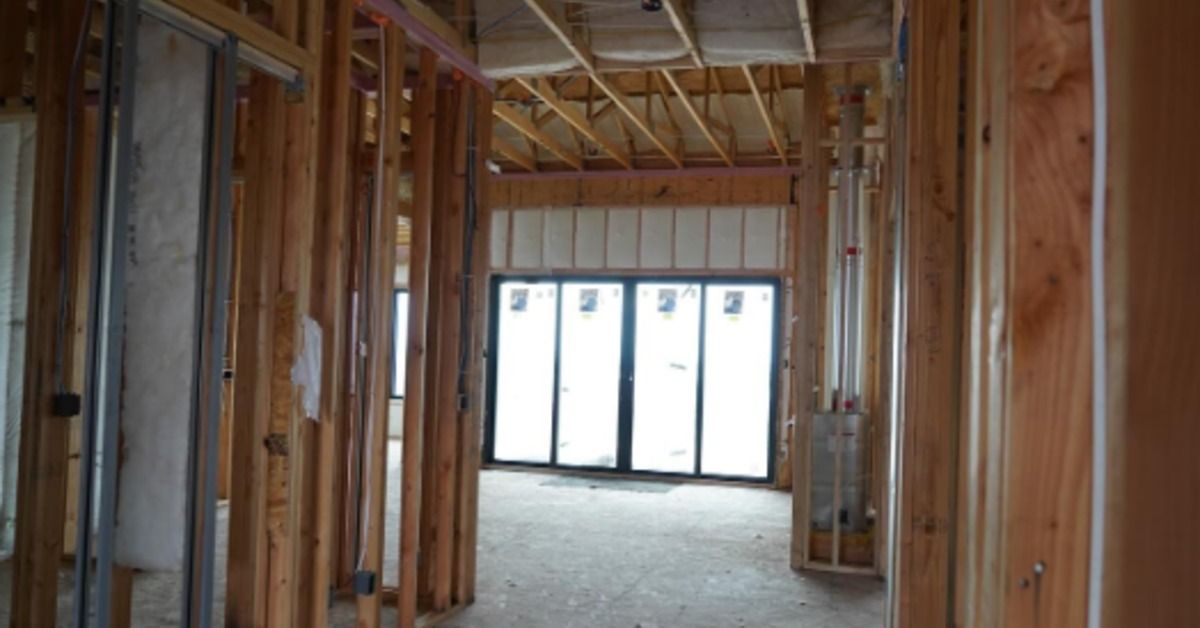
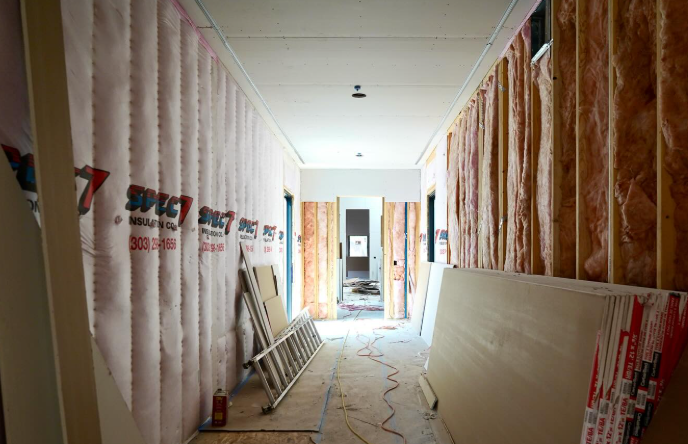
Empty spaces between framing members allow sound energy to travel through the wall cavity with limited absorption. Fibrous insulation materials—particularly mineral wool and fiberglass—minimize this transmission by dissipating sound energy within the cavity.
Mineral wool offers acoustic absorption properties that make it a popular choice in noise-sensitive partitions. Meanwhile, fiberglass batts provide another established option for residential and commercial wall systems. Neither material completely blocks sound independently, but pairing appropriate cavity insulation with specialized drywall improves the performance of many tested wall assemblies. Installers must select products that fit the framing cavities without leaving substantial gaps.
9. Seal Gaps With Acoustical Sealant
Even a carefully designed drywall assembly can lose acoustic performance when air gaps allow sound to travel between rooms. Openings around electrical boxes, wall perimeters, and penetrations provide potential routes for airborne noise to bypass the gypsum panels.
Acoustical sealant addresses these weaknesses by maintaining flexible seals at designated joints and openings. Unlike rigid products that might crack as the building settles, acoustic sealants accommodate limited movement without compromising their seal. Installers must pay particular attention to the connections between drywall and adjacent construction materials. Proper sealing helps preserve the acoustic performance of the complete partition.
10. Improve Ceiling Sound Isolation
Noise traveling between floors presents challenges because sound reaches neighboring rooms through multiple structural paths. Footsteps and moving furniture generate impact vibrations, while conversations and televisions produce airborne noise. Specialized ceiling assemblies address these issues by combining gypsum panels with carefully selected insulation and isolation components.
For example, installers may suspend drywall beneath isolation clips and channels to reduce vibration transfer through the floor structure. Additional gypsum layers increase the ceiling assembly’s mass, while cavity insulation absorbs a portion of the sound energy.
Improve the Property’s Acoustic Performance
By understanding the source of unwanted noise, you can choose the drywall solution designed to improve acoustics. If you’re searching for commercial drywall contractors in Denver, CO, or residential installation services, contact Rival Drywall. We provide services customized for your property.
Our team handles drywall installation, metal framing, insulation, and acoustical ceiling systems. Reach out to our team to request a quote for your upcoming construction or renovation project.